
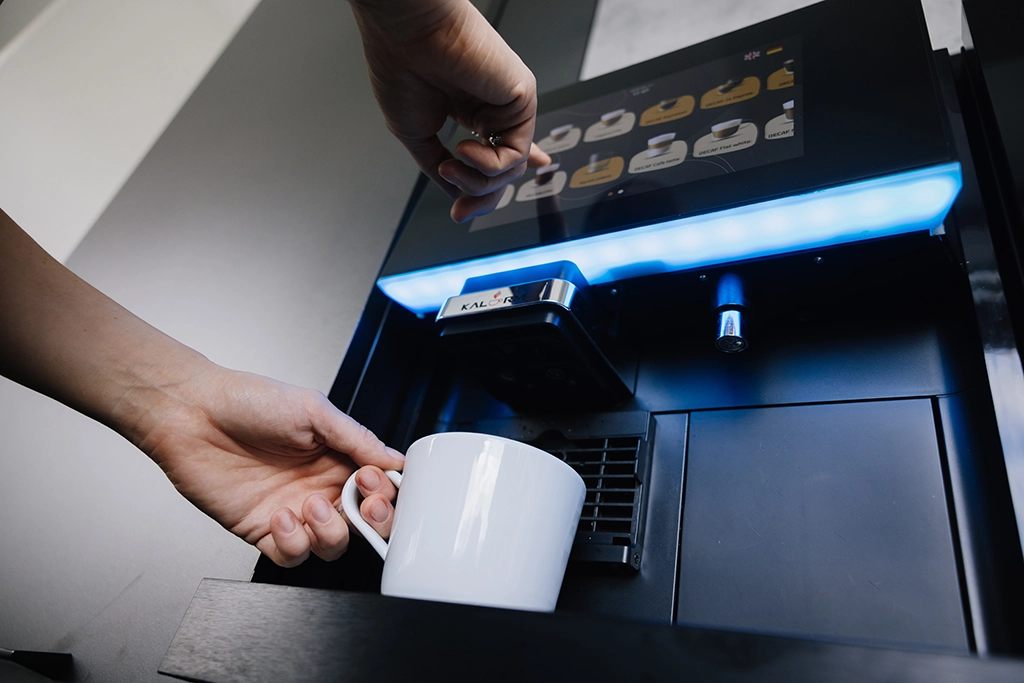
Across Europe, coffee operators are running larger and more complex fleets than ever. Around 4.5 million vending and OCS machines are installed, generating 34.5 billion vends a year and roughly €26.4 billion in total revenue. Most of that volume is coffee. About 80% of all consumption is hot beverages, and the majority of machines sit in workplaces.
That matters, because it means this is not really a retail market. It’s infrastructure. Coffee at work, every day, at scale.
Over the past few years, that infrastructure has changed quickly. Cashless payments are now standard across most Tier 1 markets. Connectivity has followed, with roughly half of European machines already connected, and that number still growing as operators upgrade fleets. At the same time, machine types have diversified. Traditional vending, bean-to-cup, table-top espresso, capsule systems, all running side by side in the same operation.
That’s where things start to get harder to manage.
Each machine type comes with its own logic. Some have built-in connectivity, some don’t. Some report data in detail, others only partially. Payments are layered on top, sometimes integrated, sometimes separate. Over time, the fleet works, but it doesn’t behave as one system.
And that shows up in daily work.
You check one platform for machine status, another for sales, something else for payments. You get the information, but it takes time to put it together. Across a large fleet, that becomes part of the cost of running it.
At the same time, the environment is still shifting.
2G networks are being phased out across Europe, with 3G to follow, forcing a large number of machines to be upgraded. Connectivity is no longer optional. It’s the base layer everything else depends on.
Then there is interoperability. At Venditalia 2026, EVA will introduce SmartLink, a protocol designed to allow machines, payment systems and management software to communicate more directly. The direction is clear. Systems are expected to work together, not in isolation.
For operators, this changes how fleets need to be managed.
The question is no longer how to connect a machine. It’s how to connect different machines in a consistent way.
That’s where platform-based approaches come in. Instead of relying on built-in connectivity from each manufacturer, operators are moving toward machine-agnostic telemetry. One layer that sits across the fleet, regardless of brand or machine type.
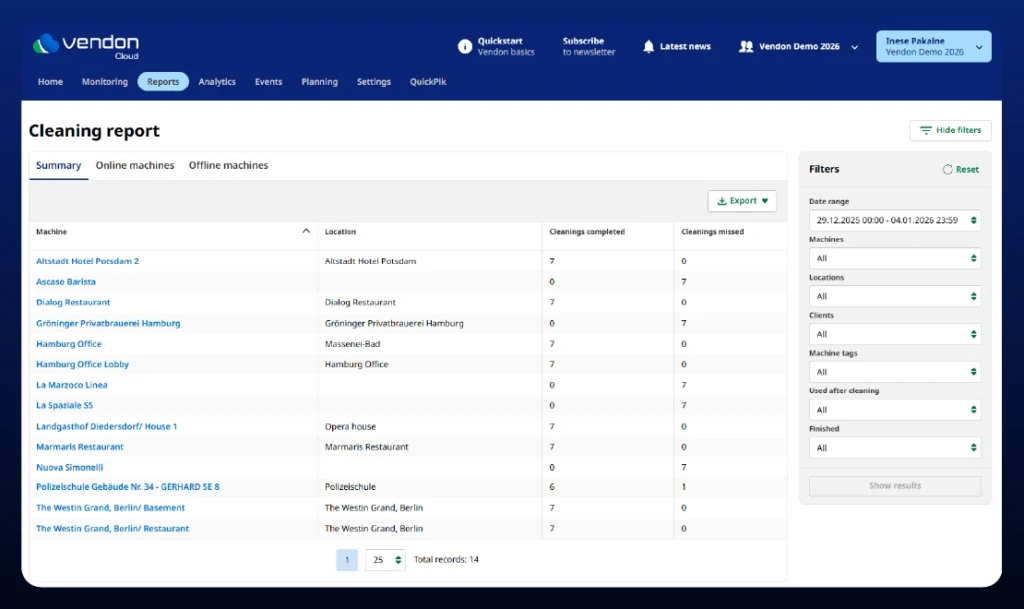
Vendon Cloud is built around that idea. It connects different machines into one system, bringing together machine data, sales and payments in a consistent way. It doesn’t replace existing setups, it sits on top, with APIs that allow integration with other tools and payment providers.
The benefit is not technical, it’s operational. Because you don’t manage machines one by one. You manage the fleet as one.
That is the direction the industry is moving in.
More machines, more data, more complexity, but also more need to standardise how everything is handled.
Vendon will be presenting this approach at Venditalia 2026 in Rimini, together with Coges. The conversation is no longer about adding technology. It’s about making mixed fleets easier to run.
Meet Coges & Vendon at Venditalia 2026
- Rimini Expo Centre
- 6–8 May 2026
- Hall D1, Stand 155
See how payment and telemetry systems can be managed together. With a clear and consistent view across your business.
Data sources:
- European Vending & Coffee Service Association (EVA) – Market Report 2024
- European Vending & Coffee Service Association (EVA) – Market Information Portal
- Berg Insight – Connected Vending Machines (latest edition)
- Research and Markets – Connected Vending Machine Market Report
- Venditalia 2026 Official Event Information
- European Vending & Coffee Service Association (EVA) – SmartLink Initiative / Interoperability Work