
Out-of-home coffee isn’t fading — but the way it performs, earns, and gets judged is changing fast.
In 2026, machines aren’t just expected to work. They’re expected to prove they belong. Margins are tighter. Clients are sharper. Users are less forgiving. And the days of “set it and forget it” are over.
Across Europe, the coffee business is still growing — but not from volume alone. It’s growing through machine-level upgrades, smarter placement, and higher price-per-cup expectations. Revenue is rising, but so is scrutiny.
What do we mean by “coffee trends 2026”?
This article lays out the real trends shaping the coffee machine business in 2026 — not surface-level changes, but structural shifts that demand new thinking from every operator still running on pre-2020 habits. What follows isn’t a checklist. It’s a new operating lens.
We’re talking about:
- How machines must perform in modern locations
- What users now demand by default
- Where machines leak value through misplacement, overcomplexity, or silence
- And how leading operators are adapting their fleets to match real-world behaviour
If you’re still relying on machines, menus, or placements that worked in 2019 — you’re already behind.
Trend 1: Office coffee is no longer routine — it’s behavioural
According to Allegra, the majority of workplace decision-makers now classify bean-to-cup coffee as an “expected standard,” not a premium perk.
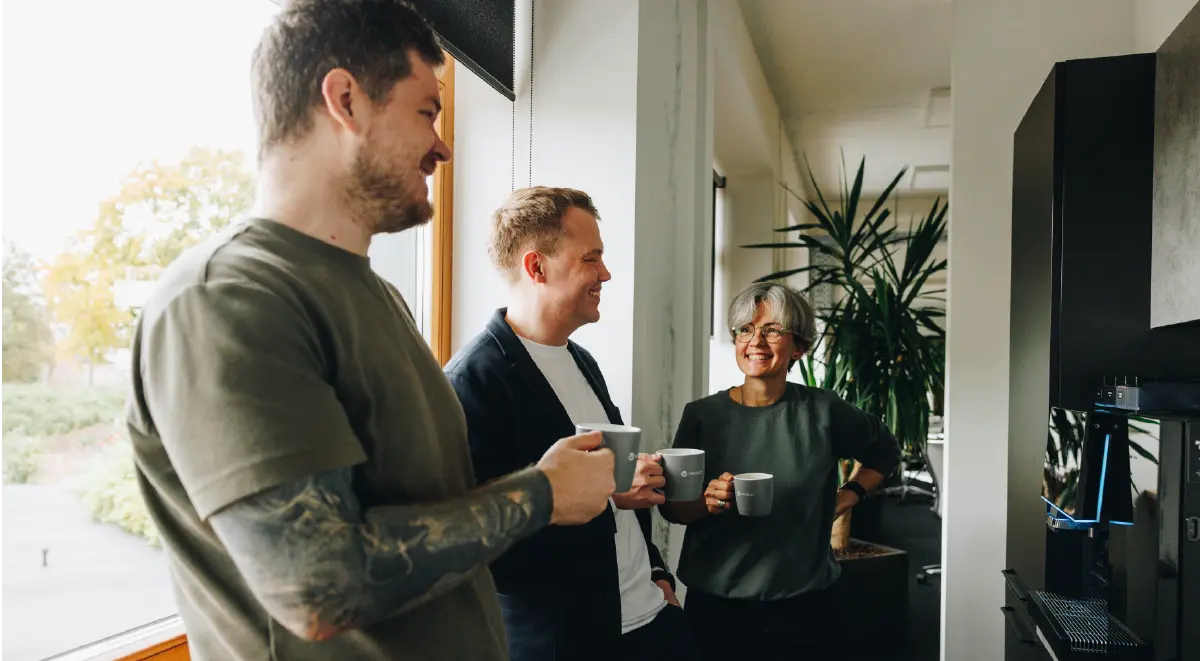
“Coffee badging” — where employees show up to grab a coffee, have a quick chat, and leave — isn’t a joke. It’s how hybrid offices function. Coffee has become part of the workplace culture strategy.
In 2026, workplace coffee isn’t just a refreshment — it’s a tool for shaping employee experience, retention, and company culture. This raises the operational bar: your machines are now part of your client’s HR strategy.
What this means for operators: Workplace placements can no longer be treated as passive installs. They require more responsive service, higher uptime, and machines that reflect company values — from sustainability to wellness.
Operator takeaway: If coffee is now part of return-to-office perks, treat it like a live service. Machines need to be consistently stocked, spotless, and delivering café-quality output — or the client starts questioning the entire setup.
Trend 2: Quality must earn the price
The gap between “cheap coffee” and “coffee worth drinking” has become painfully obvious. Users taste the difference. So do clients.
But here’s the real shift: users will still drink both — if the price, context, and expectation match. The problem is when the price says premium, but the machine says compromise.
Fresh beans, fresh milk, dairy-free options, consistent temperature, real foam, clean nozzles — these aren’t luxuries anymore. They’re table stakes.
What this means for operators: This is no longer about just keeping machines running — it’s about making sure what comes out of them lives up to the price. Quality failures now erode brand trust.
Operator takeaway: If you charge like a café, you have to deliver like one. That means no shortcuts: beans matter, milk matters, cleanliness matters. Quality is your entire value proposition now.
Trend 3: Misplaced machines eat resources
Most underperforming machines aren’t broken — they’re just in the wrong spot.
What works in a hospital doesn’t always work in a co-working hub. What’s ideal for logistics staff may flop in a quiet office.
According to EVA 2025 Market Report, machine volume stayed flat in 2025, but EU revenue rose 9–12% — driven by better location strategy and price-per-cup, not more installs.
What this means for operators: Just because a machine once made sense in a location doesn’t mean it still does. Location misfit is now one of the biggest silent margin killers in the fleet.
Operator takeaway: Review machines by data, not habits. Look at drink mix, refill frequency, complaints, time-to-failure. Fit matters more than footprint.
Trend 4: Smaller menus = better margins
You don’t need 12 drinks. You need five that sell.
Bloated menus slow decisions, increase refill time, raise cleaning overhead, and create the illusion of choice while hiding waste.
What this means for operators: Big menus don’t mean better service — they usually mean slower machines, more mess, and frustrated users. When most sales come from a few core drinks, machines are typically used more often and require less complex servicing.
Operator reality: Trim hard. Let the numbers decide what stays. Stop designing for the hypothetical user who might want the hazelnut oat macchiato twice a month.
Trend 5: Silent machines cost more than you think
Machines that don’t report issues or accept fast payments are falling behind.
Unplanned downtime damages trust. Slow payment kills convenience. Users expect connected service and contactless speed.
What this means for operators: Machine silence doesn’t mean all is well — it means you’re blind. Every error left unreported turns into user complaints, missed sales, and heavier technician costs.
Operator takeaway: Operators using remote diagnostics consistently report lower service effort—and far fewer reactive calls from clients. Without them, you’re flying blind and frustrating users.
Trend 6: If it can’t speak or sell — it doesn’t belong
Coffee isn’t just part of micro-markets. It’s the reason they work.
A good coffee draws users in. If the machine delivers, they stay — and buy more. If it’s broken, messy, or slow? They leave.
According to EVA e AVA reports, micro-market installations grew 38% in Europe in one year — with coffee machines acting as the lead product in the vast majority.
What this means for operators: A failing coffee machine kills the upsell. If the “barista” is unreliable, the rest of the unattended shop feels second-rate.
Operator reality: Think like a café. Coffee is the anchor. If your “barista” fails, no one browses the fridge.
Final Word: These are the trends that matter
Every machine now earns its space — or doesn’t.
Operators who adapt are already growing. Not because they do more — but because they do it better.
These are the shifts that define competitive coffee machine businesses in 2026.
Ignore them, and you’re out. Respond, and there’s still plenty of margin to earn.