

Geile Warenautomaten, a vending operator based in Westerkappeln, Germany, is rolling out Vendon Cloud across the vending machines it operates throughout Germany, connected through the Vendon vBox2 gateway. By 2030, all of the roughly 20,000 machines in the Geile & Friends industry network are to be equipped with telemetry. Coges payment systems are being installed on a large scale in the same programme, running in the same platform.
Why did Geile Warenautomaten choose Vendon?
Managing Director Michael Geile names several factors, starting with functional scope, which he divides into three levels: real-time monitoring of sales and profitability, route planning to make refilling routes more efficient, and pre-picking, where telemetry data ensures every vehicle is loaded with exactly the products the individual machines need.
“All three levels are covered by telemetry and can at the same time be linked via interfaces to other systems, for example to generate picking lists,” he told VendingSpiegel.
Geile selected the system after an intensive process of evaluating and testing various systems. He has worked with telemetry for more than 20 years. “Now we are really getting going, because we have finally found a provider that can meet all of our requirements,” he said.
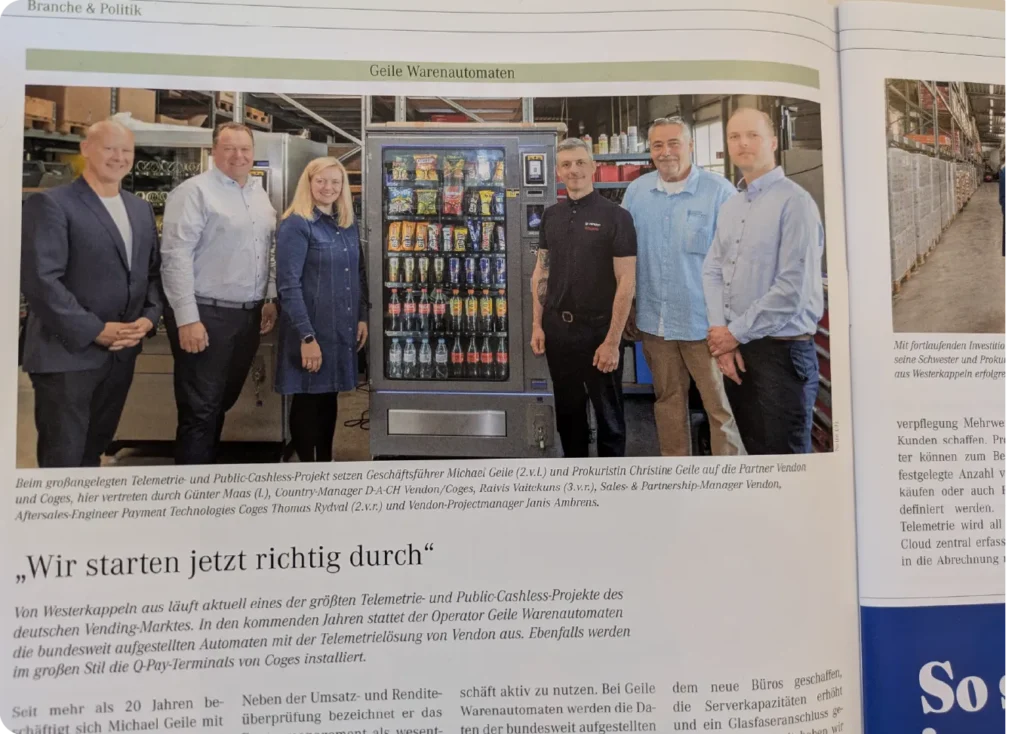
Photo source: Printed issue of VendingSpiegel September 2026 magazine featuring the Geile Warenautomaten telemetry project
What will the data be used for?
Data from machines across Germany is brought together and analysed centrally at the Westerkappeln site, which Geile prepared several years ago with new offices, increased server capacity and a fibre-optic connection.
The data is intended to influence product assortment at individual machines. Dynamic pricing could follow in future, for example for products approaching their best-before date. Geile also expects added value for suppliers, such as analysing how promotions perform at different times of year and at different temperatures.
How was the system adapted to Geile's operation?
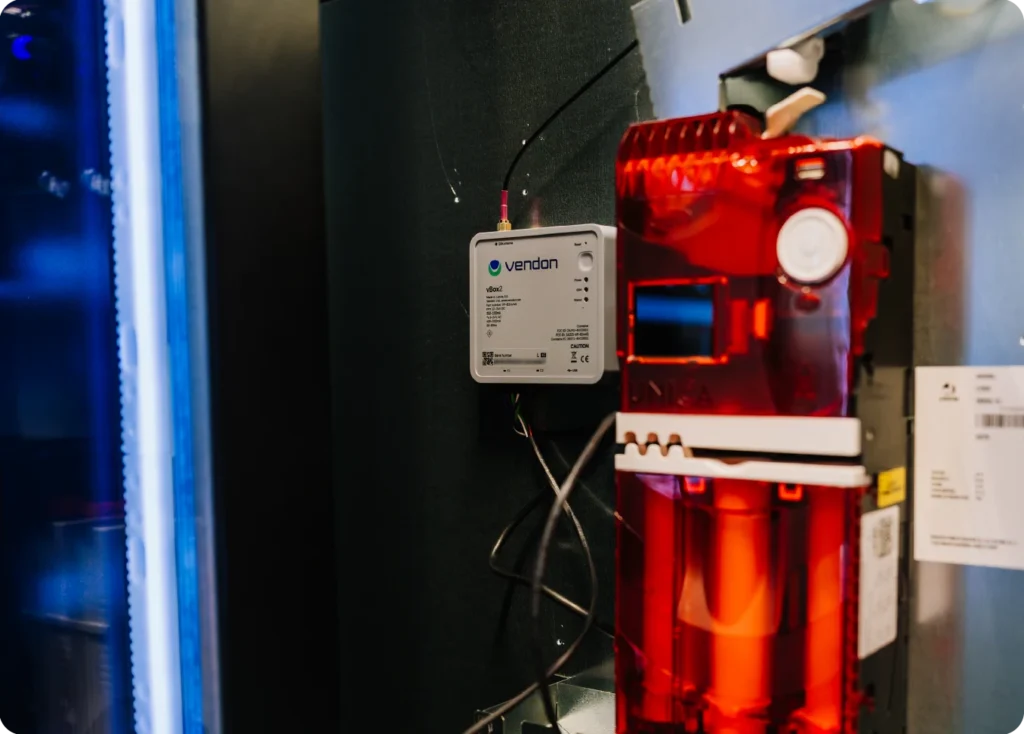
To understand Geile’s requirements, Vendon accompanied the team for several days on its daily refilling routes. One result is the option to reboot machines remotely, which avoids technician callouts for many faults. “Further customizations include solutions for offline situations involving vending machines and for internal communication between service teams,” explains Günter Maas, Country Manager D-A-CH for Vendon and Coges.
“As a matter of principle, we adapt our system to the local requirements of fiscal legislation. This means our customers are always on the safe side,” says Raivis Vaitekuns, Sales & Partnership Manager at Vendon.
Technician training is provided at the start, with support continuing afterwards. Geile’s team in Westerkappeln is also supported by Engeltec, the Vendon and Coges distributor, involved in the project from the outset.
Payments and telemetry in one platform
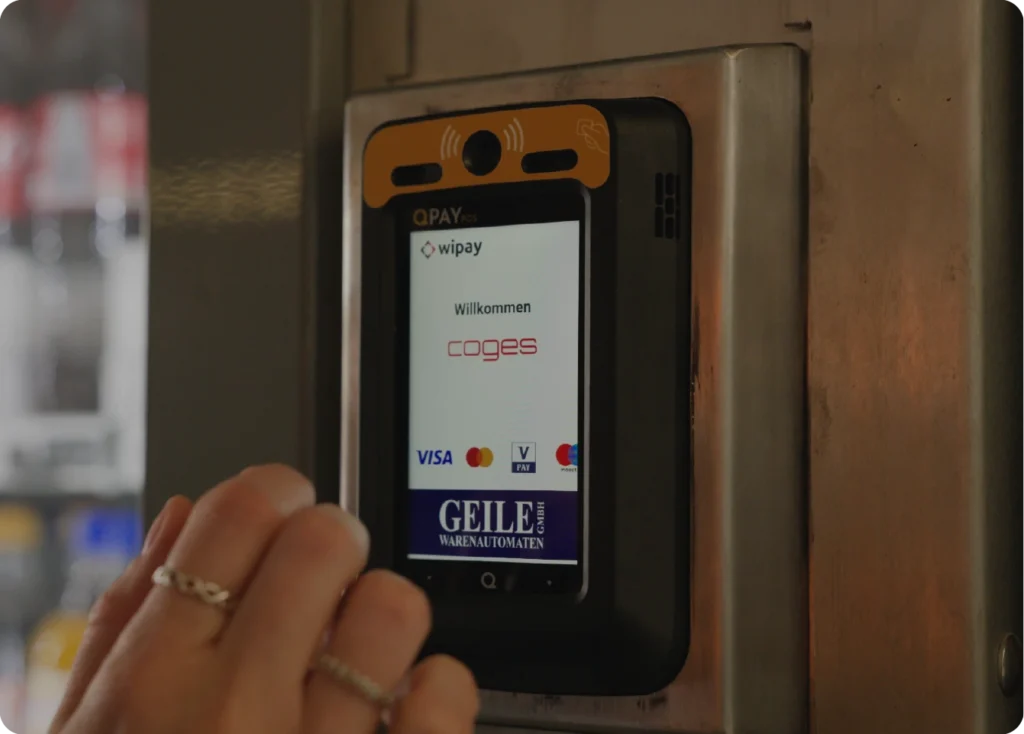
Coges payment systems are fully integrated into Vendon Cloud. Coges Nebular Cloud has been brought into Vendon Cloud as a single platform, so operators running Coges hardware get telemetry, stock control, route planning and preventative maintenance in the same place as their payment data, on the hardware they already have.
That matters for a rollout of this shape. Geile has changed supplier across its entire closed-loop area and now relies fully on Coges MyKey. Qpay public cashless terminals are being installed in four-figure quantities following a one-year test phase. The Creos banknote reader has been customised for Geile and is being deployed in larger quantities. The Hexis LP changegiver goes into larger-scale field testing next. Cashless, cash and telemetry report into one system rather than three.
Vendon and Coges are both part of the Azkoyen Group, which also develops vending machines in-house. The telemetry works with older equipment, including the last 100 Wurlitzer machines still in the Geile fleet.
The Geile rollout was built around how the company already works. Vendon adapted the system to its refilling routes, its fiscal requirements and the machines already in the fleet, including the oldest ones. That is what a rollout at this scale takes. If you are planning one, tell us how your routes run today and we will take it from there.